Song #3: Just Dropped In (To See What Condition My Condition Was In)
Originally recorded by Kenny Rogers and the First Edition
The incomparable Scott B. joins us this month and delivers an exceptionally stellar vocal performance.
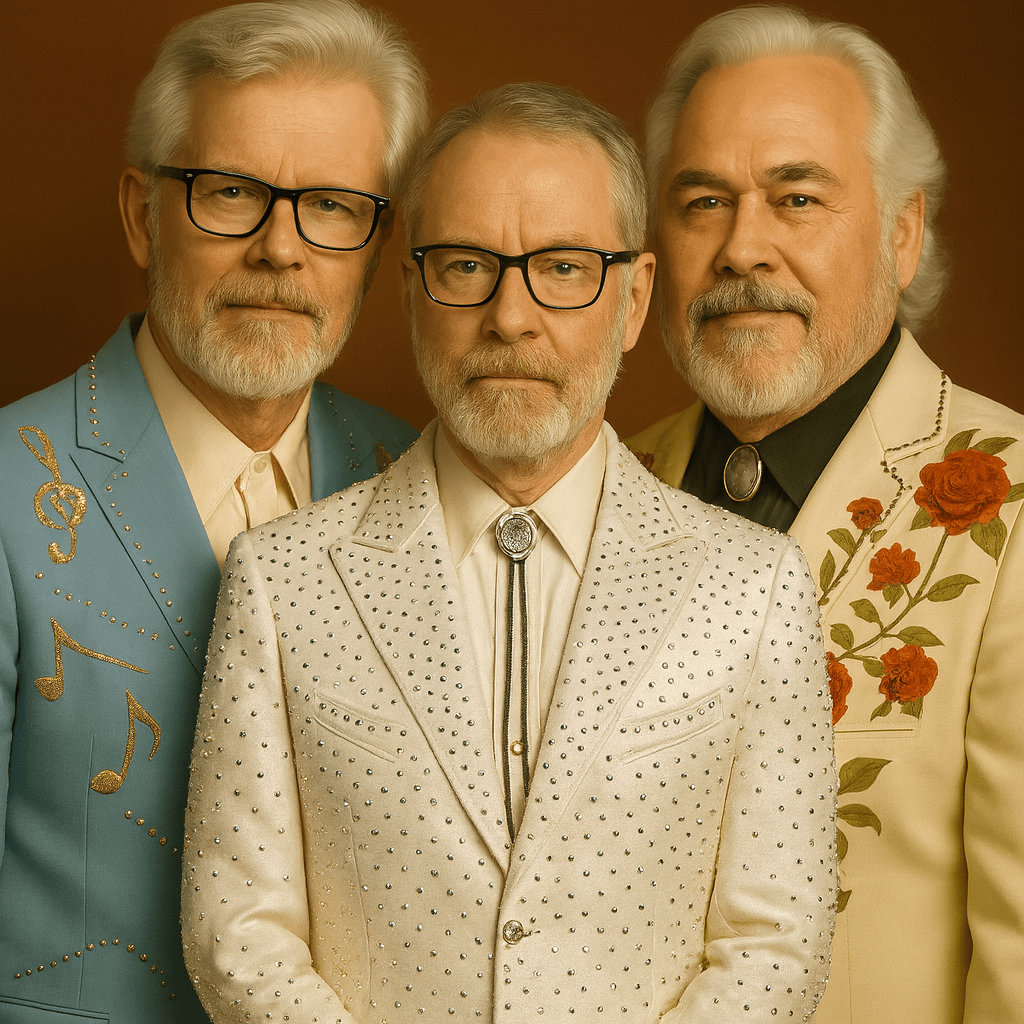
Some songs sound like accidents that history decided to keep. “Just Dropped In (To See What Condition My Condition Was In)” is one of those, a strange fusion of Nashville twang and San Francisco hallucination.
Written by Mickey Newbury in 1967, the song first surfaced in a version by Jerry Lee Lewis, a slow burning, country soul lament cut at Chips Moman’s American Sound Studio in Memphis and later issued on Lewis’ Soul My Way album. On that take, the song is almost straight, more sermon and hangover than psychedelic freak out. To be honest, there really isn’t anything especially revelatory about Jerry Lee’s version beyond the fact that it’s The Killer taking a swing at it.
Newbury and Kenny Rogers actually went to the same high school in Houston, years before one became a country-pop superstar and the other a songwriter’s songwriter. Before the hit version even existed, the tune had already slipped out as a horns-heavy Southern-soul single by Teddy Hill & the Southern Soul.
For a supposedly “out there” drug song, it had a surprisingly busy early life across genres. It was in this version that the idea of transposing the key up a semitone after every verse/chorus was introduced, as Jerry’s version cruises along in the same key for the duration of the song. This change was later adopted by producer Mike Post for The First Edition’s version, and it adds significantly to the “tripped-out vibe” of that definitive take.
Newbury supposedly wrote it after what he later called a “night in hell,” a bad trip he turned into a warning label about LSD. In his telling, the lyric was meant to capture a guy whose mind might not come all the way back, people losing their grip, jumping out of windows, discovering the downside of “expanding consciousness.” On paper, it’s almost didactic. In sound, it became something much slipperier.
A few months after the Lewis version, Kenny Rogers and The First Edition picked the tune up, plugged it into the wall socket of late sixties studio wizardry, and made it sound like what one critic later described as “hillbillies on mescaline.” Newbury’s cautionary tale turned into something more ambiguous, half fable, half freak out. Producer Mike Post, years before his TV theme empire with Law & Order and Hill Street Blues, took this odd country ballad and decided to treat it like a sonic hallucination. He leaned hard on then adventurous techniques, reversed tape, heavy compression, extreme EQ, lots of double tracking, and cut it at Valentine Recording Studios in the San Fernando Valley, an unassuming LA room that happened to be wired for weird.
Post reworked the track considerably, adding both the “ya, oh ya” vocal tags and those otherworldly marimba breaks. Those touches go a long way toward welding the music to the lyric’s sense of disorientation.
Post had the electric guitar parts recorded “straight,” then flipped some of the riffs backwards to create that queasy, inside out intro. Glen Campbell is widely credited with playing the central guitar solo, drenched in compression and tremolo until it sounds like the amp itself is breathing. Session ace Mike Deasy added guitar textures and nervous acoustic filigree around the vocal. First Edition guitarist Terry Williams is often named as the player behind the wilder mid song solo that Jimi Hendrix allegedly singled out as a favorite. Who did what has become part of the folklore, and different accounts shuffle the credits, which is kind of perfect for a song that’s literally about not trusting your own perception.
The single, recorded in October 1967 and released as the group’s second 45, exploded in early 1968. It climbed to No. 5 on the Billboard Hot 100 in the U.S. and hit the Top 5 in Canada, yanking The First Edition out of relative obscurity. Almost overnight, they went from an experiment on Reprise Records, ex New Christy Minstrels gone electric, to regulars on national TV. The twist is that most of their other material leaned toward harmony heavy country rock and folk. “Just Dropped In” was the one full bore dive into the bizarre, yet that’s the one that stuck. They were still billed simply as The First Edition at that point, Kenny Rogers’ name wasn’t yet bolted onto the front. But this trippy one off made him the unlikely face of a new fringe country archetype, the cosmic cowboy, half preacher, half outlaw.
Kenny Keeps Dropping Back In: The Rerecordings
Rogers couldn’t quite leave the song behind. After The First Edition split and his solo career took off with hits like “Lucille,” he circled back to “Just Dropped In” for his 1977 compilation Ten Years of Gold. Side one of that LP isn’t just a “best of,” it’s all rerecordings of First Edition hits, cut in Nashville with his road band, Bloodline, at Jack Clement’s studio. “Just Dropped In” is one of them, rebuilt by a Kenny who was no longer a freaky late 60s bandleader but a full blown country star.
That Ten Years of Gold version is smoother and more relaxed. The fuzz is tamed, the mix is wider, and the whole thing leans toward mid tempo country rock gloss rather than psychedelic chaos. They do, however, manage to sneak in some very era appropriate 70s synths on this one, a phasey string machine chord and a Minimoog swell, which largely take over the role of the backwards guitar bits. You can still hear the skeleton of the original arrangement, but the danger feels more like a memory than a present tense. It’s basically the song as told by the adult in the room, a man revisiting his bad trip years later with a steadier pulse, a better contract, and a mortgage to pay.
It’s a fascinating “alternate timeline.” If this Nashville remake had somehow been the one to hit in 1968, “Just Dropped In” would probably be remembered as a clever, slightly spooky country song, interesting, but not iconic. The fact that the version history runs the other way, unhinged hit first, cleaned up autobiography later, is part of why the whole thing feels so haunted.
On top of that, there’s the later studio remake that keeps popping up on budget compilations and streaming services under the title “Conditions (Just Dropped In)” or simply “Conditions.” This isn’t the 1967 hit recording, and it’s not just the Ten Years of Gold cut repackaged. It’s another, later take that was clearly designed for licensing. That’s the version you run into on cheap “Golden Hits” CDs and random digital anthologies where labels need “Kenny Rogers sings his old hits” without paying for the original masters.
Sonically, that “Conditions” take is tighter, cleaner, and far less unhinged. The production reflects the reissue era more than the psychedelic one, punchier drums, clearer vocal, fewer studio tricks. It’s the same lyric, the same basic arrangement, but the emphasis shifts. The bad trip is now a well told story, not a live electrical event. Between the Nashville Ten Years of Gold remake and this later “Conditions” version, you can trace Kenny’s whole arc, from accidental psychedelic traveller to seasoned country statesman, revisiting the same nightmarish song with better lighting and a better lawyer.
Back at the source, recording folklore says that original First Edition session ran on caffeine, frayed nerves, and the sense that nobody quite knew what they were making. Post was chasing a sound that felt like the room itself was warping slightly out of square. You can hear it in the way the drums punch and then smear, in the hyper compressed guitars, in the backing vocals that seem to hover just behind the beat, like they’re arriving from another dimension. What emerged didn’t sound like anything else on AM radio, a country song with its consciousness scrambled. Listeners didn’t know whether to laugh, dance, or check their pulse.
The tension at the heart of that original track is what keeps it alive. Newbury’s intent, a warning about chemical burnout and psychic damage, collided with production that made burnout sound perversely seductive. It’s the same contradiction that ran through the late 1960s, one channel blaring moral panic about LSD, another inviting you to blow your mind wide open. Lines like “I tripped on a cloud and fell eight miles high” or “I saw so much I broke my mind” play as confession and come on at the same time. Rogers sings it with this weird mix of authority and distance, like he’s narrating someone else’s bad choices in a voice that knows exactly how they feel.
Over the decades, the song has drifted through pop culture like a recurring hallucination. The most famous reappearance is in The Big Lebowski, where it scores the “Gutterballs” dream sequence, a bowling alley Busby Berkeley number that matches the track’s off kilter glamour perfectly. But the First Edition recording has turned up all over the place, in sketch comedy TV in the late 60s, in the opening of the video game Driver 2, in the Dwayne Johnson revenge flick Faster, in the Scientology exposé Going Clear, and in later TV shows from Chuck to True Detective and Young Sheldon. Every time it appears, it brings that same uneasy charge, a little bit kitsch, a little bit menacing, like a flashback you didn’t plan on having today.
Since The First Edition’s hit, Rogers has recut the song, Newbury’s own work has been reevaluated, and countless artists have taken a run at it, soul, metal, indie, Americana, each trying to walk the same tightrope between warning and temptation. Crate diggers keep returning to the original because it still raises the same question: how did something this warped end up blasting out of transistor radios in 1968?
“Just Dropped In” lives in that sweet spot where a very specific cultural moment, late sixties drug panic, studio experimentation, country rock in chrysalis, manages to sound permanently out of time. It’s a dispatch from the edge of someone’s sanity that somehow became a sing along. Half a century later, the condition our condition is in hasn’t gotten any less strange, which might be why the song, in all its different versions, still lands.
Our version
Our version was mainly recorded around 2010 with Neil Exall handling guitars and bass, and Damon Richardson bangin’ the drums. I revisited the track this year (2025), rerecorded the keys, added a touch of theremin, because if any song ever called for theremin, it’s this one, and did a bunch of editing overall. The incomparable Mr. Scott B., of Groovy Religion and Scott B. Sympathy infamy, delivered an absolutely magnificent lead vocal. In all honesty, and I don’t often speak this boastfully, I really do think it’s one of the best performances of this song out there, all three of Kenny’s versions included. We go way back with Scott to our very beginnings: 1984, cutting our teeth at The Beverly Tavern when Groovy Religion still played with a drum machine and I was wobbling around on bass in Slightly Damaged as the “rhythm section,” with Ian Blurton on drums. Scott, Neil, and Damon all did a smash up job on the backing vocals as well.
Equipment wise, it was the usual suspects: Vox AC 30, Fender amps, lots of ribbon mics, running through UA, Amek, and Trident knockoff channels. I’m sure there was a Big Muff in there somewhere.
To be honest, I don’t remember much about cutting this one, because it seemed to come together pretty easily and, let’s say, drama free. Sometimes the weird ones just cooperate.
Join us next month as we roll out a more recently recorded track that harks back to the very early 80s, right at the dawn of the new wave and new romantic era.
SONG #2: SPELLBOUND
ORIGINALLY RECORDED BY SIOUXSIE AND THE BANSHEES
Vocalist Leslea Keurvorst joins us this month with a fittingly spine-tingling performance for the holiday season.
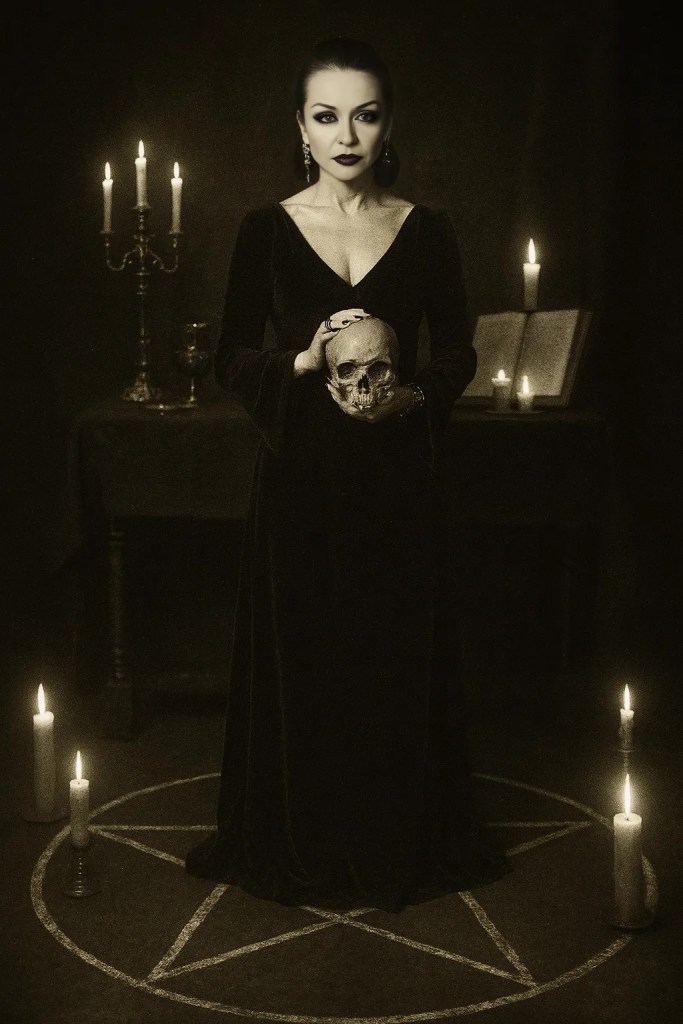
Leslea Keurvorst | ReverbNation
For our special Halloween Heavy Friends release, what could be more fitting than diving into a goth classic that’s practically ingrained into many of our DNA? This month, we take on “Spellbound” by Siouxsie and the Banshees — a track that personally shaped me long before I ever stepped into a rehearsal room.
I still remember buying the Juju album the week it came out, back in 1981, when I was staying in Berlin at the impressionable age of 16. That record hit like nothing else — all atmosphere, rhythm, and tension. The sound of Budgie’s toms, John McGeoch’s swirling guitars, and Siouxsie’s voice cutting through the fog — it was dark, hypnotic, and exhilarating. Even then, it felt like the future.
A Bit of Banshees History
Siouxsie and the Banshees began almost by accident — and in pure punk fashion. Their first-ever show was at the 100 Club Punk Festival in September 1976, when Siouxsie Sioux and bassist Steven Severin volunteered to fill a last-minute slot. They had no songs, no plan, just nerve.
Their impromptu lineup featured Sid Vicious on drums (before joining the Sex Pistols) and Marco Pirroni on guitar (later of Adam and the Ants). They performed a 20-minute improvised version of “The Lord’s Prayer” — a chaotic, confrontational collage of punk, prayer, and noise.
Unlike many of their punk peers who rushed into major label deals during the 1977 signing frenzy, Siouxsie and The Banshees held out. They refused to compromise, insisting on complete artistic control. When they finally signed with Polydor in mid-1978, they arrived not as a raw punk band but as a fully realized creative force. Their stark, serrated sound helped define the shift from punk’s chaos to post-punk’s darker, more experimental territory — a path that many would follow, but few would lead as boldly.
Their debut single “Hong Kong Garden” (August 1978) hit #7 on the UK charts — a shimmering, cinematic anthem that proved punk could evolve. Their first two albums, The Scream (1978) and Join Hands (1979), solidified their cult status — cold, poetic, and uncompromising.
In September 1979, turmoil erupted when guitarist John McKay and drummer Kenny Morris walked out mid-tour in Aberdeen. But the much-publicized walkout didn’t sink the band. If anything, it blew the doors wide open. After a brief rescue by The Cure’s Robert Smith, the Banshees entered a period of reinvention that led directly to their most celebrated lineup and the era-defining records that pushed post-punk into new territory.
Reinvention and the Kaleidoscope Era
Enter Budgie, formerly of The Slits, bringing a fluid, tribal power to the drums. Their next album, Kaleidoscope (1980), marked a bold sonic shift — using synths, effects, and a more exploratory palette, produced again by Nigel Gray (The Police).
Then came John McGeoch, whose guitar work with Magazine had already set a new standard for post-punk sophistication. His addition, along with Budgie’s rhythmic innovation, completed what most fans consider the definitive Banshees lineup:
Siouxsie Sioux, Steven Severin, Budgie, and John McGeoch.
This lineup created Juju (1981) — the record that transformed the Banshees from a punk survivor into a full-blown dark art form.
Juju and “Spellbound”
Recorded at Surrey Sound Studios with Nigel Gray, Juju was lush, moody, and razor-sharp — a perfect collision of rhythm, atmosphere, and melody.
The lead single, “Spellbound,” released in May 1981, was instantly iconic — McGeoch’s cascading guitars, Budgie’s hypnotic toms, and Siouxsie’s soaring vocals created something that felt both cinematic and supernatural. The track hit #22 on the UK charts and helped push Juju to #7. To this day, it’s one of the great moments of post-punk alchemy.
Siouxsie once described “Spellbound” as “a joyful kind of whirlwind — but with dark edges.” And that’s exactly what it is.
Berlin, Trains, and Finding My Way
When I bought Juju that week in Berlin, I was on a summer-long trip through Europe. I had run off from a rather difficult and unhealthy home life to go live on the trains for a summer with a Eurail pass — sleeping on the trains and waking up in a new city every day, maybe staying for a few days in a hostel. With a backpack, a notebook, and a vague sense that I was supposed to be “finding myself.” Admittedly, I may have also been a tad obsessed by Kraftwerk’s Trans Europe Express and Autobahn records. I had a cousin, Detlef, who lived in Berlin and let me crash at his place for a while — a proper bed, hot showers, and somewhere to think.
So my copy of Juju is a little beat-up as I carried it around Europe that summer, looking for a turntable to play it on. I managed to get it spun from the infamous hash bars in Amsterdam’s red-light district to a quaint little bar outside Athens, where they humoured me for maybe a song and a half before shooing me off with an annoyed look on their faces.
At that point, I was trying to figure out what I really wanted to do with my life. There were two things on the horizon: music or filmmaking.
The more I thought about it, the clearer it became. Film seemed like a beautiful mess — so many moving parts, producers, co-producers, executive producers — layers of bureaucracy between an idea and its execution. Music, by contrast, felt immediate, pure, direct. You could pick up a guitar, or in my case, a synth, hit record, and create a world by the end of the day. That simplicity, that autonomy, was magnetic.
Even with my not-yet-fully-matured sixteen-year-old brain, music felt like the more truthful route to art. So somewhere between train stations and turntables with my copy of Juju in hand, I decided — music it is.
Proto-Goth Roots
This one also harkens back to my proto-goth roots and ties strongly to my own teenage years.
I started my first band at 17, with fellow Heavy Friends Ian Blurton on drums, Crawford Teasdale on guitar, and the long-lost Nancy Prescott on vocals. We called ourselves Slightly Damaged — a psychedelic punk band that fell right into the early 1980s pre-goth scene. Lots of makeup, teased hair, and a zebra-striped or rooster red mohawk or two. We also made our own clothes at the time, and that garnered a two-page spread in one of Now Magazine’s early fashion columns.
We were a bit obsessed with the emerging Batcave movement in England and bands like Bauhaus, The Cure, the Virgin Prunes, and Specimen. I think it would be a few more years before the world would actually call it “goth.” Back then, we jokingly called it “batcave” or “death cult” music.
Nancy — who was also my girlfriend at the time — and I lived and breathed those records. The Banshees’ Juju, their brilliant follow-up A Kiss in the Dreamhouse, and The Creatures’ first album (Siouxsie and Budgie’s side project) were the soundtrack to a lot of teenage sex and experimentation.
To this day, any one of those records can instantly conjure a vision of Nancy — naked under her mother’s old fur coat — an item we quite literally destroyed in the first year and a half of our relationship. Those records didn’t just soundtrack our lives — they were woven into them.
So yeah, this song connects to me on a lot of levels. It’s not just a cover — it’s a time machine ingrained into my DNA that conjures up a kaleidoscopic world of images and emotions for me. .
The Heavy Friends Version
Seeing its legendary status and my personal connections, I did not want to mess with this one too much, and the goal was to make it our own, but stay reverent. We first recorded our version of “Spellbound” around 2011, but it didn’t quite land. There were timing and tightness issues, the tempo was too fast, and the vocal delivery felt rushed. Basically, it didn’t hit the mark.
For this new version, I went back to those original tracks and did some micro-editing, beefed up the drums and bass with some modern studio wizardry, and slowed it down about 6 BPM. The result feels deeper, groovier — like it found its center.
The incomparable Leslea Keurvorst then re-did the vocal, and I believe she really nailed it this time around.
Gear and Players
Gear-wise, it was the usual suspects:
Vox, Fender, and Standel amps, plenty of ribbon mics, and some vintage strips to keep things warm, analog, and moody.
One notable bit of trivia — this is one of the last Heavy Friends recordings to feature a beautiful vintage Yamaha 12-string guitar, which sadly met a rather violent end in what I can only describe as the worst case of instrument-cide I have personally seen — “gruesomely slaughtered Susan Atkins–style,” 26 stab wounds, no less. A fittingly gothic, yet traumatizing exit to one of our Heavy Friends staple instruments. I will not elaborate more out of consideration for the bereaved.
The lineup:
• Neil Exall – does a brilliant job layering up those guitars and plays the bass as well.
• Damon Richardson – Lays down the beat and mesmerizes with his hypnotic tambourine.
• Leslea Keurvorst – Brings the vibe with another spectacular vocal performance.
• Bernard Maiezza – Apart from the production and mix, I take a bit of a back seat and only add some light orchestration touches.
In the End
Juju remains one of those records that sounds both of its time and utterly timeless. Revisiting “Spellbound” brought me back to that first spark — to Berlin, to teenage bedrooms lit by blacklight, incense, and an awakening world of wonder, to the sound of discovering something dark and beautiful that haunts one forever.
Hope you enjoy this one as much as we enjoyed conjuring it up again.
We will back mid-month for our November release, where we go all “cowboys on mescaline”.
— Bernard / Heavy Friends
Song #1: Darkside Of The Mushroom
-Dark Side of the Mushroom” was originally recorded by The Chocolate Watchband in late 1966, during the sessions for their debut album No Way Out, which was released in September 1967 on Tower Records.
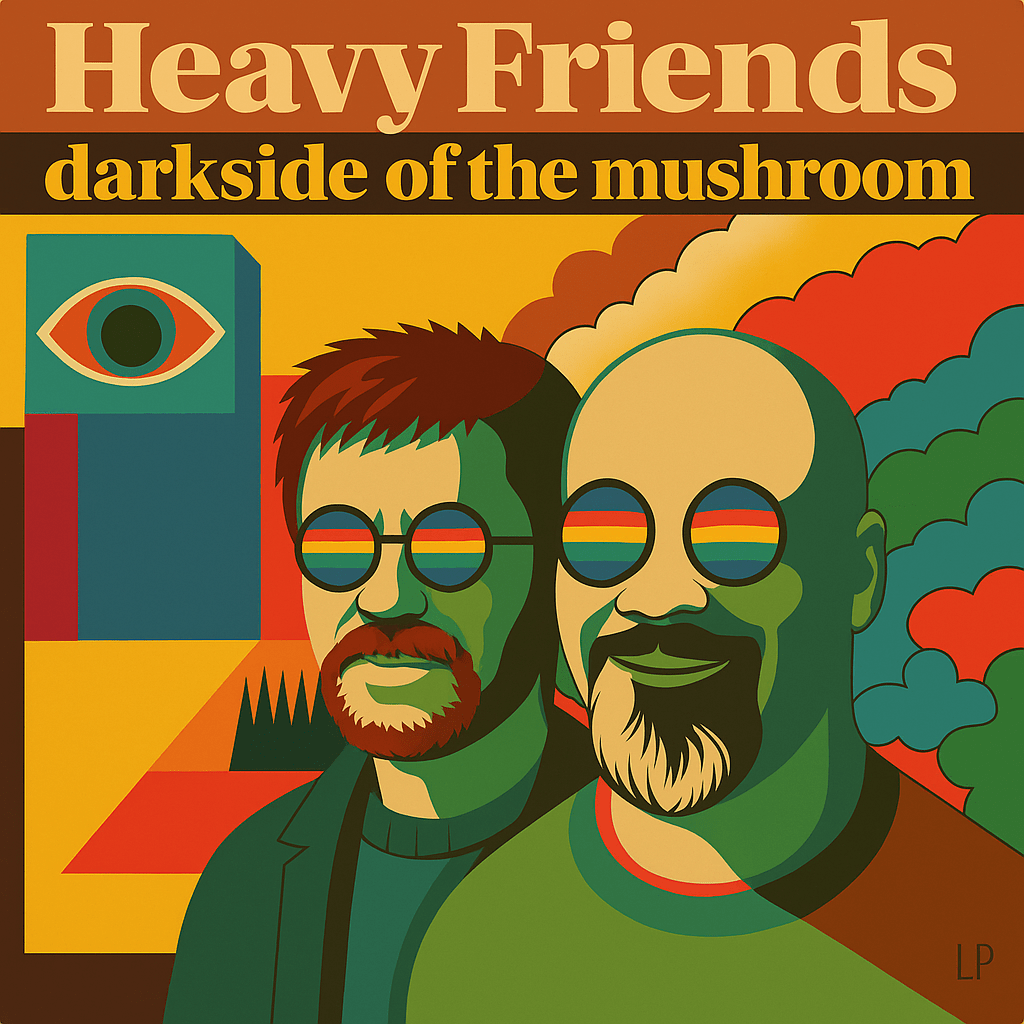
Welcome to Heavy Friends, a monthly postcard from the intersection of memory and mutation..
Season 1 of Heavy Friends marks the beginning of our first full cycle of our song-of-the-month experiment —in which we go digging through the record bins of collective memory and bring a few lost treasures back to life as reinterpreted by me, Bernard Maiezza, the Heavy Friends Collective, and various guests. My main sidekick for much of the ride has been my dear friend, Guitarist, amateur anaesthesiologist, and would-be saxophonist, Neil Exall.
At its core, Heavy Friends is about rediscovery — not nostalgia, but reclamation. Each track is rebuilt from the inside out: familiar silhouettes reshaped through both modern gear and vintage instruments and recording gear. One month it might be a San Jose garage instrumental with a NASA epilogue; the next, a post-punk incantation covered in autumn dust. Every song comes with its own story — who made it, how it was recorded, and why it still matters.
The process is as messy and human as the music. Sessions happen where and when they can. It originally grew out of my old recording studio, Highfield Sound, which was located in a small bungalow in the East End of Toronto. From there, the concept has continued in borrowed studios, home basements, and whatever rooms have good ghosts and bad wiring. Analog meets digital, tremolo meets tape hiss, and somewhere in between we find the heartbeat.
Season 1 is our first map — a collection of fourteen stops on a long, winding road where reverence meets reinvention. Whether it’s The Cars, The Monkees, or Kenny Rogers and The First Edition, we take the familiar apart and hand it back, usually a little fuzzier and a bit more skewed.
The ride’s free, but we strongly urge you to contribute on a pay what you can basis to help us with the costs.The mission’s simple: to keep music weird, alive, and slightly out of phase. Come along — there’s always room in the van.
We’re opening with “Dark Side of the Mushroom,” the moody instrumental from No Way Out (1967), credited to Bill Cooper and Richard “Richie” Podolor, and cut at American Recording in Studio City. It’s a two-and-a-half-minute scene-setter that feels like a midnight projector throwing dust motes across your wall — a prelude to something strange, slightly dangerous, and very much of its time.
The Watch Band Paradox
If you know the Chocolate Watch Band lore, you know the tug-of-war. Producer Ed Cobb — also behind The Standells and The Electric Prunes — ran sessions like a lab experiment: chase the idea, worry about the fingerprints later. Cobb had a vision and sometimes hired ringers to get it. The band would cut a blistering track, then find out that on the LP, someone had swapped in a studio take with different players. Controversial at the time, catnip for collectors later. “Dark Side of the Mushroom” is just one of those studio concoctions — which makes it the perfect place for Heavy Friends to poke at the myth of authenticity and have a little fun.
But the story gets messier. On No Way Out, only four tracks actually feature the full, original Watch Band lineup as intended. Many vocals were replaced by session singer Don Bennett, and instrumental parts were embellished or even rebuilt in post-production. The band themselves sometimes had no idea which versions would make it to the final LP. The result was a hybrid — live energy on one side, studio sorcery on the other — a paradox that gave the record its haunted, half-real vibe.
And then there’s the marketing chaos. When No Way Out was released, Tower Records mistakenly pressed it under their Uptown label — a division reserved for blues and R&B acts. Imagine walking into a show expecting a soul revue and getting a snarling garage-psych outfit instead. David Aguilar, the band’s frontman, later recalled that even promoters got confused: some thought “The Chocolate Watchband” must be a Black R&B group and booked them accordingly. The resulting gigs were awkward, electric, and occasionally transcendent.
Ed Cobb’s studio in Studio City was its own Petri dish. The air, reportedly, was thick with “experimentation.” According to a High Times interview years later, the Watch Band kept a large carved box in their gear trunk — filled, as one writer put it, with “every conceivable variety of mind-altering substance.” Cobb claimed the smoke would leak under the control-room door, leaving him with a three-day contact high. Aguilar laughed about it decades later: he didn’t know what became of the box — “maybe it was beamed directly into space.”
“Dark Side of the Mushroom” fits that legend perfectly — all tremolo haze, surf-spy menace, and sunset delirium. It’s the soundtrack to a slow-motion mushroom cloud unfurling across California suburbia.
Meanwhile, behind the board, Richie Podolor and Bill Cooper were quietly building the bridge between underground psychedelia and FM rock. The same pair would go on to engineer and produce Three Dog Night and Steppenwolf, turning garage grit into radio gold. You can hear the lineage: the reverb tails of “Dark Side” mutate directly into the roar of “Born to Be Wild.”
For all the confusion around credits, the Chocolate Watch Band could absolutely deliver live. They were a San Jose outfit with sharp suits, proto-punk swagger, and a sound that hit somewhere between The Yardbirds and The Seeds. In June 1967, they played the KFRC Fantasy Fair and Magic Mountain Festival — the Bay Area’s warm-up act for Monterey Pop — alongside The Doors, Jefferson Airplane, and The Byrds. That’s how close they were to the fire when everything blew open.
The band’s reputation grew posthumously, as garage-rock collectors started dissecting the albums track by track, trying to decode which takes featured the real band and which were Cobb’s Frankenstein creations. Reissues by Sundazed and others have since clarified the picture — but honestly, the blur is part of the appeal. It’s the mystery that makes the grooves hum.
The Afterlife of David Aguilar
If there’s a perfect postscript to No Way Out, it’s David Aguilar himself — the band’s original frontman, lyricist, and occasional chaos conductor. Onstage in 1967, Aguilar was pure combustion: part Jagger, part acid-test MC, a kinetic blur in Beatle boots and paisley. He could turn a garage floor into a ritual circle, whip a crowd into trance, and still make it home in time to tinker with a telescope.
When the Watch Band fizzled in the early ’70s, Aguilar didn’t chase the nostalgia circuit. He pivoted — hard — into science. He earned degrees in astronomy and physics from San José State University, eventually becoming the Director of Science Information at the Harvard–Smithsonian Center for Astrophysics. His job: explain the universe to the rest of us.
By the mid-2000s he was helping NASA’s New Horizons mission send a probe past Pluto, creating visualizations and public outreach for one of the most ambitious space projects of the era. And because life loves a good twist, that gig brought him into orbit with another rock-star scientist — Brian May of Queen — who was also working on the mission. The two reportedly bonded over space photography, guitars, and the shared strangeness of having one foot in the cosmos and the other still tapping in 4/4.
Aguilar’s transformation from garage prophet to astrophysicist reads like a lost Mojo sidebar — proof that some people never really leave the trip, they just find a bigger map.
Our Take:
We decided to stay pretty close to the original — more or less. Call it faithful with fingerprints: the tune as we remember it, filtered through the collective Heavy Friends consciousness. The track was first cut around 2008, or thereabouts — this isn’t exactly an exact science, you know.
For this version, I added some extra theremin to push it a little further out of bounds, and did a fair bit of audio forensics and reconstruction on the original take to raise the bar on the new mix.
Who played what:
Neil Exall on guitars and bass, Graham McCann on drums and tamborine, and me on organ, Moog Source, and the aforementioned theremin.
Studio bits:
Notable studio gear used: Universal Audio 610 tube preamp, Universal 1176 Limiter, Amek/Neve 9098-style EQ, a couple of Trident-style channel strips, a few Yamaha PM-2000 mixer mixer channels, an AEA R84 ribbon mic, a vintage Sony reel-to-reel pre repurposed for extra grit, and assorted odds, ends, and sins. Also starring: a Standel amp for glassy hi-fi cleans — on generous loan from Sir Ian Blurton (Producer extraordinaire, enabler, slightly ornery on the best of days).
Standel Amplifiers: The Cult of Clarity
Before Marshall stacks became the language of loud, there was Standel — the amp that whispered luxury in the days when most rigs still hummed like space heaters.
Founded in 1953 by Bob Crooks in Temple City, California, Standel (short for “Standard Electronics”) started as a boutique custom builder for the players who demanded studio-grade tone before that was even a thing. Crooks’s first customer was Speedy West, the pedal steel virtuoso who wanted an amp that wouldn’t distort no matter how hard he pushed it. The result was the Standel 25L15, a 25-watt, 15-inch Jensen-loaded combo that ran astonishingly clean — built like a hi-fi component with point-to-point wiring and tolex that glowed under stage lights.
By the mid-’50s and early ’60s, Standel was the amp of choice for session players on the West Coast: Chet Atkins, Merle Travis, Joe Maphis, and the Wrecking Crew all had them parked behind their chairs. Those early models had polished chrome panels, hand-screened logos, and a fidelity that made Fenders sound gritty by comparison. Crooks was chasing clarity, not chaos — a sound that could make a jazz archtop shimmer or a steel guitar hang in the air like sunlight.
But Standel wasn’t afraid to tinker. By 1963, they were experimenting with solid-state preamps — one of the first amp companies to do so — and by the late ’60s had fully embraced hybrid designs: transistor preamps feeding tube power stages. These amps were prized for their glass-like cleans, deep tremolo, and wideband frequency response that suited the psychedelic studio boom. When fuzz and reverb hit, Standel’s high headroom made it a perfect partner — everything bloomed instead of collapsing into mud.
Artists like The Ventures, Wes Montgomery, and The Electric Prunes reportedly used Standel gear in various sessions; even Ritchie Podolor (who produced No Way Out and later Three Dog Night and Steppenwolf) was known to favour Standel’s hi-fi voicing at American Recording. Some engineers compared their sound to a reel-to-reel machine with a speaker attached — unforgiving but beautiful.
By the 1970s, the company’s fortunes waned. Cheaper, mass-produced competitors dominated the stage, and the Standel brand faded into cult status — but not into obscurity. Collectors today still hunt for the 25L15, the Artist XV, and the Imperial XV, calling them “the Rolls-Royces of American amps.” Crooks continued repairing and building prototypes into the 1980s, and boutique builders now chase that same Standel shimmer: uncompressed, transparent, and stubbornly elegant.
In short, Standel amps were the bridge between country precision and psychedelic clarity — the secret weapon for players who wanted every note to sound expensive.
So come check back in next month to see where the ride takes us next. The ride’s free, but if you’d like to keep the wheels turning, you can support us and pay what you can.
-Bernard Maiezza
credits
Bernard Maiezza: Organ, Moog Source, Theremin
Neil Exall: Guitar
Graeme McCann: Drums, Tambourine
Recorded, Produced, and Mixed by Bernard Maiezza 2008/2025
Heavy Friends — Season 1
Fourteen songs, one long conversation about sound.
Season 1 of Heavy Friends covers the first year of our song-of-the-month project — fourteen tracks on average, each re-imagined, rebuilt, or rescued from the corners of pop history. From 1960s psych obscurities and half-forgotten soundtrack cuts to post-punk ghosts and glam leftovers, we chase the songs that slipped between the cracks and make them hum again.
Every month brings a new release — recorded live off the floor or wired through whatever preamps and tape machines are in reach — along with bonus tracks, alternate takes, and behind-the-mix outtakes dropped in along the way.
Think of Season 1 as a mixtape from the garage after dark: part archive dive, part séance, part celebration of music’s beautiful accidents.
 Heavy Friends